
When More Isn’t More.

Do you really need that?   While conducting qualitative research on lightbulbs, a participant told me about her grandmother’s 98-year-old boyfriend, Chuck. He had recently bought replacement bulbs for his home and had paid a premium for ones that would last 15 years. While I admired Chuck’s optimism, I’m not sure that paying extra for bulbs that will almost certainly outlive you is a great idea for somebody on a fixed income.
Chuck is not unusual. We often seek more than we need. I was talking recently to a guy who has two cars. One is an SUV fully equipped for off-road driving, even though he admitted that has never taken the thing off-road and probably never will. The other is a Lamborghini that has a top speed of more than 150 MPH. For myself, I’ll share that I have a home theater system so powerful that, turned up to maximum volume, would flake the paint off the walls and damage my hearing.

Why do we do this? Several instincts drive this sort of behavior:

The safety margin instinct. Surplus capability feels like security (‘you never know!’)

Identity signaling. Excess capability is a way to say something about yourself. That guy with the SUV might like being able to drive offroad, even if he never does. And his Lambo signals something about virility and success, even if he never drives faster than 85.

The ‘more is more instinct. We often associate ‘more’ with ‘better,’ despite what Mies van der Rohe used to say. Over-the-top specifications feel meaningful, even if they go beyond practical requirements. This is linked to the fact that we evolved as a species under conditions of deprivation.

Fear of regret. It’s common to worry that, when making a purchase, if you don’t buy the top-of-the-line, you might regret it. You might miss out on capabilities that you turn out to need (again, ‘you never know!’).

The power of the quantifiable. That a car can go 150 MPH is a clear, numerical fact. The possibility of getting a speeding ticket is not readily quantified. Numbers feel objective and are easier to think about than squishy possibilities.

Sometimes investing in what seems to be overkill is smart. Sometimes it’s an indulgence. And sometimes it’s a misinterpretation of risk. The key to making good choices lies in thinking through such decisions with care. So, if you think you might be about acquire more than you need, ask yourself this:

“Am I buying this because I really need it, or because it represents how I would like to think about myself or how I want others to see me?”

Here’s a final thought. By now, you’ve probably already broken all your new year’s resolutions. So, as you’re thinking about the rest of the year, maybe a good goal would be to emphasize necessity over excess.

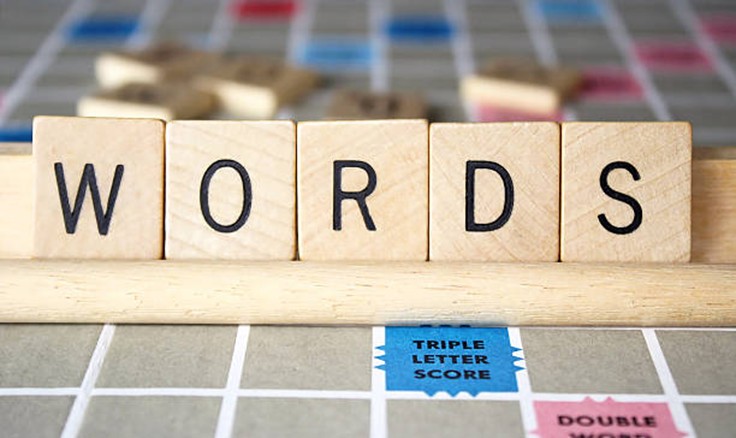
Words matter. A lot!

Say what you mean and mean what you say. A lot of arguments these days are about the meaning and usage of words. I’m increasingly dealing with this as a qualitative researcher. For one thing, the term ‘focus group’ gets used incorrectly all the time. But more importantly, understanding what research participants mean is tricky, as words are more emotionally loaded than they used to be. This makes my profession particularly valuable, as humans are very good (maybe better than robots) at parsing and understanding language.

Not only is language particularly fraught nowadays, a lot of terms are being bandied about thoughtlessly and indiscriminately.  Here are a few:

Fascism

Socialism

Genocide

Violence

I could go on, but you get the idea. These are important words. They refer to significant, real-world phenomena. When we use them incorrectly, attaching them to things they don’t accurately describe, we rob them of their meaning. When we call every unpleasant experience ‘trauma,’ the term loses the precision that makes it useful.

English has one of the largest vocabularies of any language – well over 100,000 words. There’s no reason to use the wrong word when the right one almost certainly exists.

I’ve heard people say that, while they know they are using a loaded word incorrectly, they’re doing it to ‘make a point.’ I get the sentiment. But we can make ourselves understood without, as Shakespeare might have said, ‘abusing the King’s English.’ You could argue that deliberately using a word incorrectly might be a subtle form of dishonesty. What’s more, when we incorrectly insert a term like ‘oppression’ or ‘gaslighting’ into a conversation, we make it more difficult to engage in thoughtful dialogue.

Part of what drives this is tribalism. Language informs our identity. We use codewords to signal affiliation and beliefs. In that sense, certain terms function less as descriptive language and more as badges. Using the ‘right’ word signals that you’re on the ‘correct’ side of an issue, even if the word itself is imprecise or inaccurate.

This seems like fodder for a New Year’s resolution. This year, I’m making a habit of questioning my use of language. I plan to research accepted definitions, understand etymological and historical origins, and be willing to change my usage based on what I learn. In fact, based on this process, I’ve already become much less eager to deploy the term ‘fascism.’

As my 8th grade social studies teacher, Mr. Snyder, used to tell us, “if you don’t say what you mean, you won’t mean what you say.” We all can, and should, be more precise with the words we use.