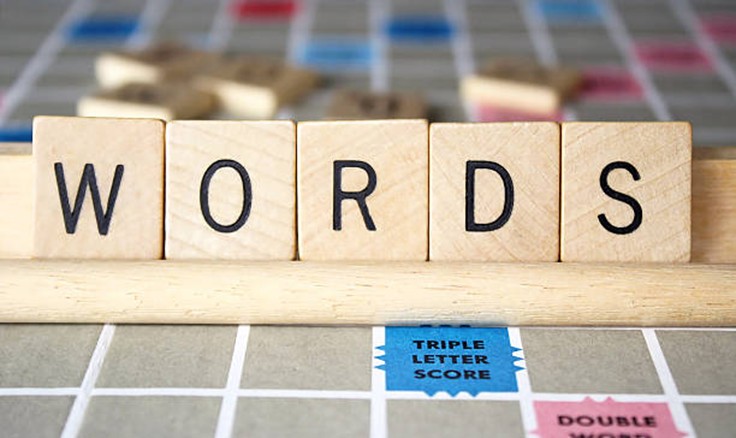
Words matter. A lot!

Say what you mean and mean what you say. A lot of arguments these days are about the meaning and usage of words. I’m increasingly dealing with this as a qualitative researcher. For one thing, the term ‘focus group’ gets used incorrectly all the time. But more importantly, understanding what research participants mean is tricky, as words are more emotionally loaded than they used to be. This makes my profession particularly valuable, as humans are very good (maybe better than robots) at parsing and understanding language.

Not only is language particularly fraught nowadays, a lot of terms are being bandied about thoughtlessly and indiscriminately.  Here are a few:

Fascism

Socialism

Genocide

Violence

I could go on, but you get the idea. These are important words. They refer to significant, real-world phenomena. When we use them incorrectly, attaching them to things they don’t accurately describe, we rob them of their meaning. When we call every unpleasant experience ‘trauma,’ the term loses the precision that makes it useful.

English has one of the largest vocabularies of any language – well over 100,000 words. There’s no reason to use the wrong word when the right one almost certainly exists.

I’ve heard people say that, while they know they are using a loaded word incorrectly, they’re doing it to ‘make a point.’ I get the sentiment. But we can make ourselves understood without, as Shakespeare might have said, ‘abusing the King’s English.’ You could argue that deliberately using a word incorrectly might be a subtle form of dishonesty. What’s more, when we incorrectly insert a term like ‘oppression’ or ‘gaslighting’ into a conversation, we make it more difficult to engage in thoughtful dialogue.

Part of what drives this is tribalism. Language informs our identity. We use codewords to signal affiliation and beliefs. In that sense, certain terms function less as descriptive language and more as badges. Using the ‘right’ word signals that you’re on the ‘correct’ side of an issue, even if the word itself is imprecise or inaccurate.

This seems like fodder for a New Year’s resolution. This year, I’m making a habit of questioning my use of language. I plan to research accepted definitions, understand etymological and historical origins, and be willing to change my usage based on what I learn. In fact, based on this process, I’ve already become much less eager to deploy the term ‘fascism.’

As my 8th grade social studies teacher, Mr. Snyder, used to tell us, “if you don’t say what you mean, you won’t mean what you say.” We all can, and should, be more precise with the words we use.