I’ve long been fascinated by psychics. Recently I’ve given presentations to market researchers on the question of whether techniques from the mystical arts can be applied to qualitative research (spoiler – they can!). One thing that I’ve come to appreciate in my study of this topic is the willingness of people to take the pronouncements of psychics, no matter how general, as being uniquely applicable to themselves. For instance, a psychic might say something like, ‘you can be very hard on yourself.’ This is a statement that could apply to anybody. But, to the person on the receiving end, it sounds personal and profound.
This is the power of what psychologists call ‘subjective validation,’ which is a fancy way of saying that we tend to make everything all about ourselves. Specifically, it’s a cognitive bias that leads us to assume that information is correct if it has personal meaning or significance to us.
This is an ever-present mental habit. We need to be on guard for it, as it can lead us astray in our thinking. It can cause us to engage in thought patterns that can be counterproductive. For instance:
We mistake resonance for accuracy. We’ve all done this. You see or hear something, and it just ‘clicks.’ The fact that something intuitively resonates is important, but it’s also important to remember that what you’re responding to may not be accuracy, but that it fits your self-image. This can be a problem, as it stops you from continuing to evaluate because you’re already convinced.
We embrace self-perpetuating personal narratives. Our perceptions of ourselves – “I’m a risk-taker!” or “I’m a people person!” – lead us to interpret events in ways that confirm our narrative. This causes us to ignore or reinterpret facts that conflict with our self-image in order to make everything fit. This can be a problem because a story that explains everything is a story that can’t be corrected.
As a marketing strategist and qualitative researcher, I make a point of exploring how research participants’ self-images inform how they shape opinions and make decisions. This is valuable to clients, because understanding how consumers map themselves onto brands, products and services can be instrumental to developing effective marketing and brand communication strategies.
A final thought. We are a pattern-seeking species. We evolved in a dangerous environment in which being able to identify predators or prey quickly was essential to survival. The environment has changed, but the tendency remains. However, due to our tendency towards subjective validation, often the pattern we are seeking is ourselves. So remember – it’s not all about you.

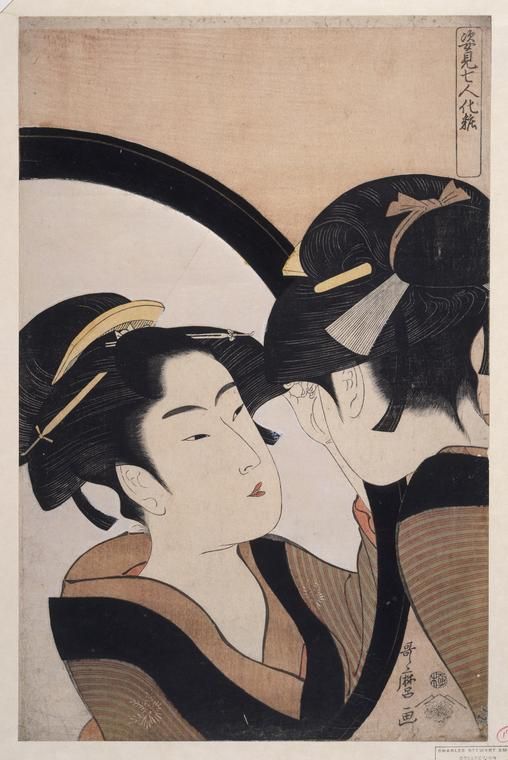 Why are we always looking in the mirror?