
What’s Six Times Seven?

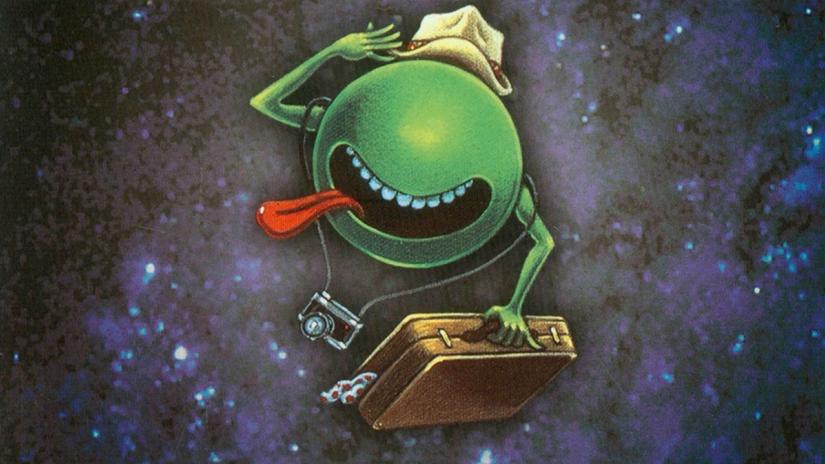
Has it occurred to anybody other than me that The Hitchhiker’s Guide to the Galaxy is an absolute must-read for marketers and researchers?  Those of you who’ve read it – and if you haven’t, you REALLY should – probably remember the point in the story in which the massive supercomputer, Deep Thought, after 7.5 million years of intense mentation, finally reveals the answer to The Great Question of Life, the Universe and Everything.  That answer?  Let’s all say it together:  “Forty-two.”
This is one of the great jokes of the book.  And, not to belabor the point, it’s funny because, after seven and a half million years of nonstop computation, Deep Thought comes up with an answer that’s thoroughly useless.  Even Deep Thought knows this.  Before giving The Answer, he warns his audience, “I don’t think that you’re going to like it.”  The two poor guys who are tasked with communicating The Answer to the masses, Phouchg and Loonquawl, are horrified.  “We’re going to get lynched, aren’t we?” whispers one to the other.  And then, Deep Thought provides a crucial insight, observing: “I think the problem, to be quite honest with you, is that you’ve never actually known what the question is.”  After fumbling briefly trying to articulate the question, Phouchg and Loonquawl realize that Deep Thought is correct.  They have no idea what they’re actually trying to ask.
And so, what does Deep Thought do next?  Well, like any consultant worth his salt, he proposes a follow-up study.  He’ll design a new computer.  One comprised of living beings.  It will be called – The Earth.  Over ten million years, this human computer will work to formulate The Question.  And, Deep Thought promises, “once you do know what the question actually is, you’ll know what the answer means.”
In other words, Deep Thought proposes a follow-up qualitative phase that will explain the results of the just completed quant study.  Because, as we all know, without a human element, most research is of limited value.  Let’s ignore the fact that this whole project comes to nothing when the Vogons destroy the Earth to make way for a new hyperspace bypass.  There’s just no standing in the way of progress.
Why do I bring this up?  Because it’s important to remind ourselves that, while quantitative research is essential for delivering answers, it’s rarely helpful when it comes to providing precisely defined questions.
Let’s say you’re trying to understand the applicability of a new technology to a category, and whether it could lead to new product opportunities.  Typically we ask these questions in the form of written concepts.  However, before you put a concept into a quantitative test, it’s crucial to make sure the concept is clear—that it’s actually communicating what you want it to—that it uses the consumer’s own vocabulary to communicate key ideas, and that it’s sufficiently specific that it will provide measurable responses.  The only way I know to do this sort of thing is through qualitative exposure: showing the concept to some potential consumers and talking it through.
Here’s another example: perhaps you’re planning to field a segmentation study.  Segmentation questionnaires often contain lists of attributes for respondents to evaluate for their association with a brand, as well as attitudinal statements to see if the participants identify with them.  How can you be sure your attribute lists are correctly worded, complete, and don’t contain unnecessary elements?  And how can you be sure you’re describing the correct consumer attitudes?  Again, there’s only one answer – qualitative.
And here’s the thing.  If you go into your quantitative research without conducting a qualitative phase, you risk getting results that are, at best, useless and at worst, misleading.  So, not only is the cost of your research at risk, but the potential cost of an unsuccessful product launch might loom in your future.
One last point – and get ready for some shameless promotion of professional qualitative researchers. This sort of research is very difficult.  It requires an experienced marketing and research professional who not only gets your category, but who also understands the quantitative research being planned, and who knows how to do things like test vocabulary and conduct appropriate creative and projective exercises that will help participants describe key attributes and attitudes.  There are certain types of qualitative research non-professionals might be able to conduct themselves, but this isn’t one of them.
So, next time you’re considering doing some research, think about whether you’re looking for answers or questions.  That will tell you a lot about how to proceed.

The Most Important Research Tool You’re Probably Not Using.

Of all the newsletters and blog posts I’ve written, the ones that consistently get the greatest response are those on mindset models.  This isn’t surprising—I’m sure that I like these tools for the same reasons as everybody else; they’re powerful, quick to learn and easy to use.  And yet, when I talk to marketers and fellow researchers about them, I usually get a blank stare.  So here’s my case for why everybody should know about mindset models.
A lot of the analytical tools marketers and researchers use are extremely complex and highly detailed.  Examples of such tools include the Kano Model, the Fogg Behavior Model, the Utility Trade-off Model and the Keller Brand Equity Model.  I make frequent use of all of these, and find them invaluable.  However, these tools all share a drawback; they take a long time to internalize and understand, and longer still to master their application.   Not so with mindset models.  They can be described in a few minutes.  And once you’ve had one explained, you’ll immediately know how to use it.  As a result, it’s easy to build up an extensive set of these tools.  I’ve identified over thirty mindset models that I use regularly.  I’m such a passionate advocate for these tools that I’ll actually be giving a talk on them at the Quirks Event in London on February 11-12.  In it I’ll share a variety of indispensable mindset tools.
So, what do I mean when I use the term ‘mindset?’  The formal definition I like to use is that a mindset is a system of perceptions and attitudes formed by circumstances, intentions, experiences and needs.  Put more simply, a mindset is nothing more than how somebody perceives or relates to a specific situation.  When you understand somebody’s mindset, you’re seeing the world from their point of view.  That’s a powerful thing to be able to do, particularly if you’re struggling to understand your data, or if you want to look at your data with more rigor or a fresh set of eyes.  A good metaphor for mindsets is lenses—when you look through them, everything comes into focus.
I’ve already written two posts on mindset models: maximizing/satisficing and scarcity.  My post on generosity also references seven mindset tools from evolutionary psychology.  You can access them again with links provided at the end of this post.
Here’s another: possibility versus feasibility.  Individuals who have a possibility mindset see situations in terms of what could be, paying little regard to what’s realistic.  Those with a feasibility mindset focus on whether or not something can be done, and how.
Why is this important?  Because, if you’re showing new product ideas to potential buyers, their mindset will profoundly influence their interest level.  For instance, I’ve noticed that early adopters of new technologies tend naturally to adopt a mindset of possibility—they get excited about the promise of a new idea, and don’t get hung up on why it might not work.  So, when designing marketing communications aimed at early adopters, marketers should account for this mindset.  On the other hand, later adopters tend to have a mindset of feasibility.  They focus on potential problems and shortcomings. That’s why they choose to wait, letting others deal with the steep part of the learning curve, why marketers should probably not focus on selling brand new technologies to consumer segments for which feasibility is a dominant mindset, and why marketing communications aimed at them might do well to focus on a product’s proven track record.  It’s also important to be aware of these mindsets when conducting ideation or co-creation sessions—participants who can’t leave behind a feasibility mindset and focus on possibility are unlikely to be able to contribute.  So, if you’re recruiting consumers for such an event, a few attitudinal screening questions can greatly increase your chances of success.  What’s more, it’s a good idea to include some exercises at the beginning of the session to foster possibility thinking.
Making use of mindset models is easy—you just need to get into the habit of asking yourself what role mindsets are playing in the perceptions, attitudes and behaviors observed in the situation at hand.  If you’re listening to research participants and having difficulty understanding their opinions, think about what their mindset might be.  Remember that every mindset has its own logic, and if you can understand what the operating mindset is, people’s points of view will start to make more sense.  I have a checklist of questions I routinely ask myself to help focus on mindsets:
  • What mindsets are evident?
  • How are they shaping perceptions?
  • What behaviors are they driving?
  • What can they tell us about segments?
  • What are the implications for branding and tactics?
Take this list and refer to it when conducting research, reviewing research data, developing brand strategies or tactics, and when arguing with your significant other. After a while, you’ll find you’re in the habit and won’t even need to think about it. Then you’ll be a Master of Mindsets!
Previous Mindset Blog Post Links:
Scarcity:  https://thomasmrich.com/2019/09/25/why-being-poor-is-so-expensive/
Maximizing & Satisficing: https://thomasmrich.com/2019/08/21/when-good-enough-is-good-enough-2/
Evolutionary Psychology: https://thomasmrich.com/2019/10/28/on-the-benefits-of-generosity/
Morality:  https://thomasmrich.com/2020/10/09/the-elephant-in-the-room/
Loneliness:  https://thomasmrich.com/2020/07/13/remember-eleanor-rigby/


Everything I Need to Know About the Holidays I Learned From Dirty Harry.

Around this time of year, during the ‘get-acquainted’ portion of focus groups, research respondents seem to want to talk about the holidays.  I wish I could say that they speak in glowing, excited terms, but I’d be lying.  Mainly, they talk about angst.
This is unsurprising—it’s a stressful time of year.  Professional workloads increase in order to get things done before year-end, preparing for the holidays and family travel can present significant logistical challenges, this is a time of year when money can be particularly tight, and the colder, shorter days in northerly climes can get people down.
But I think there’s another reason: I think we create unreasonable expectations for ourselves.  People feel intense pressure to be perfect around the holidays, and often feel judged (and found wanting) by others.
Here are some actual, verbatim quotes from holiday-time research participants I’ve recorded in recent years:
“This is the time of year I feel I have to be all things to all people.”
“I really feel like I have to provide my family with a perfect Christmas.  Whatever it takes to do that, I’m going to do.” 
 “My family expects that I’ll do everything exactly the way my mother did—may she rest in peace.  If they think I’ve cut any corners, I’m going to hear about it.” 
 “The worst thing is that the stress itself breeds more stress.  I worry that my looking all stressed out will upset my kids.”
I’ll bet you can see yourself in some of those remarks.  That being the case, around this time of year, I’ve gotten in the habit of invoking what I call The Dirty Harry Principle, articulated here by the great man himself:
https://www.youtube.com/watch?v=_VrFV5r8cs0
What Detective Callahan is trying to say is that we should ease up on ourselves (to be honest, that’s actually not at all what he’s saying here—you’ll have to watch the movie if you want to know what he’s really talking about.  But never mind that.)
There are two principles to which we hold dear that seem to underlie this holiday anxiety:
  • Perfectionism—I’ve noticed that even the most loosey-goosey people can turn into raging obsessives this time of year.  Somebody who’s happy to make cookies from store brand frozen dough at any other time will feel compelled to make them from scratch, using organic, artisanal, non-GMO ingredients come December.
  • Self-reliance—there’s a lot to be said for a DIY mentality.  There are situations in which the best person to do something really is you.  However, sometimes we cross the line from principle to fetish.  It’s easy to fall into the trap of thinking that you must do everything yourself (and suffer in the process), and that not doing so is evidence of some sort of character flaw.
My philosophy—give yourself a break and don’t hold yourself too closely to those two principles this time of year.  Know your limitations, and be willing to make some compromises or get some help.  And, give your family and friends a break as well.  Make sure they know that you love them no matter what, and that you’re not going to judge them if they don’t hand-knit you a scarf this year, and instead buy it online.
Knowing your limitations is also worthwhile in your professional life.  While high standards are essential to success, there’s a line beyond which they can cause dysfunction.  And while there are certain tasks that professional imperatives require we do ourselves, everything else is fair game for outsourcing.  Remember—the less time you spend doing things you don’t like (and probably aren’t good at), the more time you spend doing the things you enjoy and do well.  And that’s a pretty good recipe for success.

If This Feels So Good, Why Am I So Unhappy?

Something I’m seeing a lot lately in the research I conduct is the blurring of the line between the ideas of pleasure and happiness.
I was recently leading a focus group discussion on – well, let’s just call them ‘less healthy foods’—and several participants, when talking about why they eat foods they know they shouldn’t, said something to the effect of, ‘hey, it makes me happy.’  When asked what they thought that implied, they generally indicated that they felt that anything that makes one happy can’t be bad, as happiness is seen as being itself a healthy thing.  If we were elementary school math students, we would now invoke the transitive property:
Unhealthy food = happiness
Happiness = healthy
Therefore, unhealthy food = healthy food
And that, friends, is how we rationalize self-destructive behavior.  So, what’s the problem with this logic?  The problem is that every time these people used the word ‘happiness,’ they actually should have said ‘pleasure.’  People often use these terms interchangeably in colloquial conversation, but it’s important to understand that pleasure and happiness are not the same thing.
I’m far from the first person to notice the mashing up of these two concepts.  Dr. Robert Lustig has written an entire book on this, The Hacking of the American Mind.  In it, he enumerates the differences between pleasure and happiness:
  1. Pleasure is a short-term phenomenon, happiness is long-term;
  2. Pleasure is physical, happiness is emotional;
  3. Pleasure is derived from taking, happiness from giving;
  4. Pleasure can be achieved with tangible things, happiness cannot;
  5. Pleasure is experienced alone, happiness is experienced in social interactions;
  6. Extremes of pleasure can lead to addiction, while there is no such thing as being addicted to happiness;
  7. Pleasure is associated with the neurotransmitter dopamine, while happiness is associated with serotonin.
These last two points are particularly important, as excess dopamine can foster addiction, which, obviously, can compromise future happiness.  Furthermore, dopamine downregulates serotonin, meaning that it actually, physically reduces happiness.  As Lustig puts it, “the more pleasure we seek, the more unhappy we get.” 
So why is this important?  Because, while there’s nothing marketers and researchers can do if consumers and research participants confuse pleasure and happiness, we as professionals need to keep them straight.
Pleasure and happiness are both potential brand benefits and behavior motivators.  But pleasure is a lower order benefit – one primarily associated with physical needs, while happiness is a higher order benefit – one associated with affiliation, esteem and self-actualization.  And this has clear implications for marketers.  Pleasure may induce trial and maybe even repeat purchase, but it will never engender the sort of emotional relationship – the bond – that drives true brand connection and loyalty.  If consumers find a product that produces either a greater physiological response, or a similar one at a better price, they’re going to switch if there’s nothing else binding them to the brand.
On the other hand, brands that also provide non-functional benefits that truly drive happiness tend to be stickier.  Think of Toms, the shoe brand.  For every pair of shoes they sell to paying customers, they donate a pair to one who cannot.  To date, they have given away over 60 million pairs of shoes.  The shoes might give a consumer pleasure (my wife says they’re very comfortable), but the company’s charitable activities provide genuine happiness.  Happiness is also more likely to enable a brand to command a premium price, despite offering items that, on a purely functional basis, might not really justify that premium.  Why do you think Apple products sell for so much more than comparable competitive offerings?  I’m one of those insufferably smug Apple people myself, and I know exactly why: Apple is more than just hardware, it’s a tribe.  It provides its customers with an identity and a set of values.
This being the case, while conducting research, it is important to understand, when assessing benefits, what participants specifically mean when taking about pleasure and happiness.  Qualitative approaches are particularly effective at exploring this issue.  Because these terms tend to get used interchangeably, this requires the researcher to ask questions or conduct exercises that will allow participants to be specific.  This is not a complicated task.  For instance, if somebody uses the word happiness when describing a product usage experience, simply ask for clarification: when you say ‘happiness,’ what exactly is it that’s making you happy?  Picture sort exercises can also be also useful: please select one from this set of images that tells something about how using this product makes you feel.
Developing a clear understanding of the exact nature of the benefits provided by a brand – and whether those benefits bring mere pleasure, or if they truly ladder up to happiness – will allow marketers to build strong, lasting bonds with consumers and create effective communication and retail tactics.